
Cyber Security Consultancy: Physical and Environmental Protection
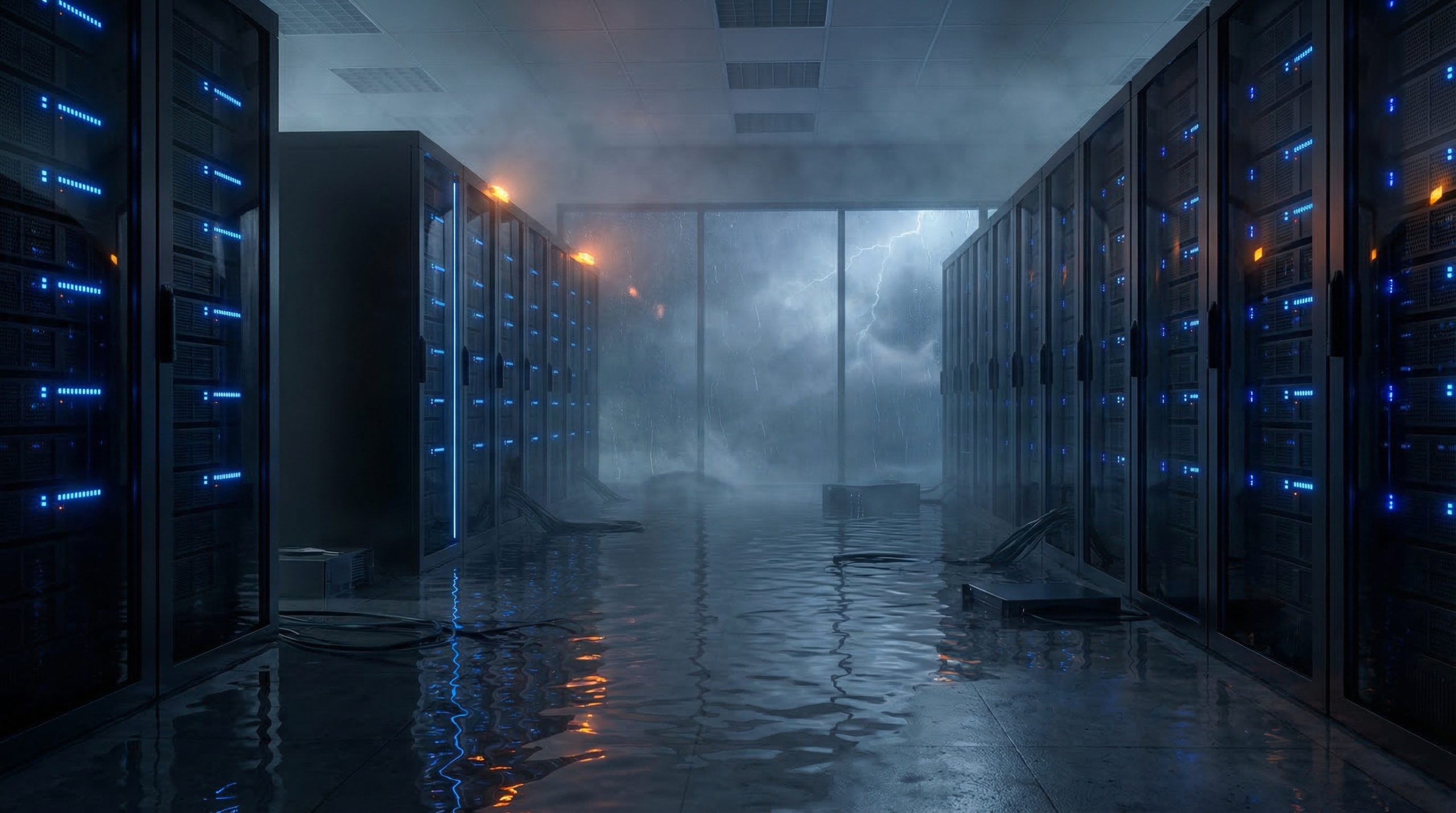
Cyber resilience goes beyond firewalls and passwords, physical security controls and environmental risk management are equally critical to protecting your organisation. Storm Dennis showed how flooding can destroy server rooms, backups, and operations in hours – , highlighting why business continuity planning must account for real-world threats like fire, flood, and theft. Simple measures like off-site backups, access controls, and environmental monitoring can mean the difference between a minor disruption and a business-ending disaster.
Introduction
The office is busy. Staff are focused, systems are running smoothly, and client work is progressing well. Everything feels stable. Then one morning, it happens….
The rain doesn’t stop. Water begins to seep through the doors. Rooms flood. Devices are submerged in water. Paper records are ruined. Operations grind to a halt. Staff can’t come in. You realise your backups are stored locally and they’re ruined due to the flood. Recovery takes weeks. Clients are beyond frustrated. Financial and reputational impact is severe.
This is what can happen when physical and environmental risks aren’t considered. In this article we focus on the theme of Physical and Environmental protection. We reference a case study, provide general guidance and recommendations.
What is Physical and Environmental Protection?
Protecting assets means managing physical and environmental risks that could lead to loss, theft, or damage. It’s about taking action to secure premises with controls (like physical security locks, alarms and CCTV), to avoid security incidents. It’s about safeguarding equipment with temperature and humidity controls. It involves assessing risk and having appropriate measures in place to support – this includes consideration for heating, ventilation, air conditioning, flood defences, remote working and having policies to support
Relatable Case Study
- Organisation: Multiple UK businesses and public services across South Wales, Herefordshire, and Worcestershire were impacted
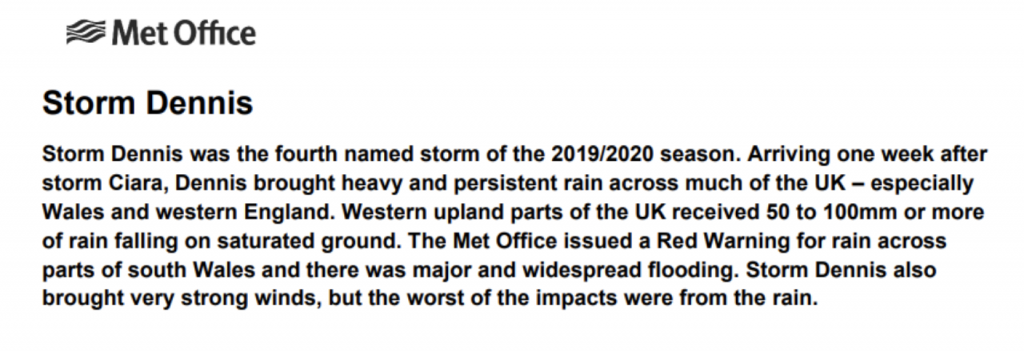
- Incident: Storm Dennis brought extreme weather conditions, causing widespread flooding. Rivers reached record levels. Offices, server rooms, and paper archives were destroyed. Businesses faced prolonged downtime, data loss, and heavy recovery costs
- Financial Implications: The flooding caused millions in damages, disrupted operations, and led to insurance claims, reputational harm, and long-term business continuity challenge
- How it Links to the theme of Physical and Environmental Protection:
- Environmental controls – Organisations had not considered flooding or off-site backups
- Physical aspects – Critical assets were stored in places where water could get in
- Contingency planning – Limited disaster recovery procedures led to outages and data loss
- Source Information: https://www.metoffice.gov.uk/binaries/content/assets/metofficegovuk/pdf/weather/learn-about/uk-past-events/interesting/2020/2020_03_storm_dennis.pdf
General Guidance
- Maintain a comprehensive risk assessment with risk treatment plans
- Measures could include door and window locks, physical security, and video surveillance
- Restrict access to those with valid needs
- Protect networking equipment and sockets
- Consider staff working in public places, from home, or working away overnight
- Maintain equipment to specific working conditions (HVAC) and consider other environmental impacts, such as flooding
Recommended Actions
- Keep it simple and secure
- Use a risk assessment to determine appropriate action
- Use locks, alarms, and physical access controls
- Consider flood barriers, fire suppression, and temperature monitoring
- Restrict access to sensitive data – physically and digitally
- Seek guidance and support from an IASME Certification Body and Certified Information System Security Professional (CISSP) – such as RB Consultancy Ltd
How We Help
At RB Consultancy Ltd, we support organisations by:
- Providing templates, guidance and experience to support
- Explaining what security measures are available and how they can help
- Collaborating to implement security controls
- Assessing and issuing certifications – such as Cyber Essentials, Cyber Essentials Plus, and IASME Cyber Assurance
- Providing risk assessment advice and guidance
- Contact us for consultancy and certification support
Conclusion
Cyber resilience isn’t just digital – it relates to physical and environment aspects too. Storm Dennis highlights the impact of environmental and physical threats to operations – it can destroy assets, halt operations and impact clients.
By implementing access restrictions and encryption, considering climate control and off-site backups, each measure can strengthen resilience against disruption. Recognising threats like fire, flood, and theft can help organisations prepare for incidents, reduce impact and recover faster.
RB Consultancy Ltd help organisations understand the importance of the physical and environmental theme – we support the implementation of key requirements and help build cyber resilience. We are an IASME Certification Body and NCSC Assured Service Provider who provide services to empower and protect organisations. Holding CISSP and ISO 27001 lead implementer certification, you can Contact Us for assistance with cyber security resilience.
This blog is written by Remo Belisari, Managing Director of RB Consultancy Ltd. He is an experienced cyber security professional and cyber advisor. Remo holds certifications in CISSP, ISSAP, ISO 27001, Cyber Essentials, and IASME Cyber Assurance. He has many years of experience in IT and cyber security. He has supported organisations worldwide. His work includes helping a Fortune 500 company in the USA and over 100 organisations across the UK. The views in this blog are his own. They do not necessarily reflect the views of RB Consultancy Ltd, its clients, partners, or affiliates. The content is for general information only.